
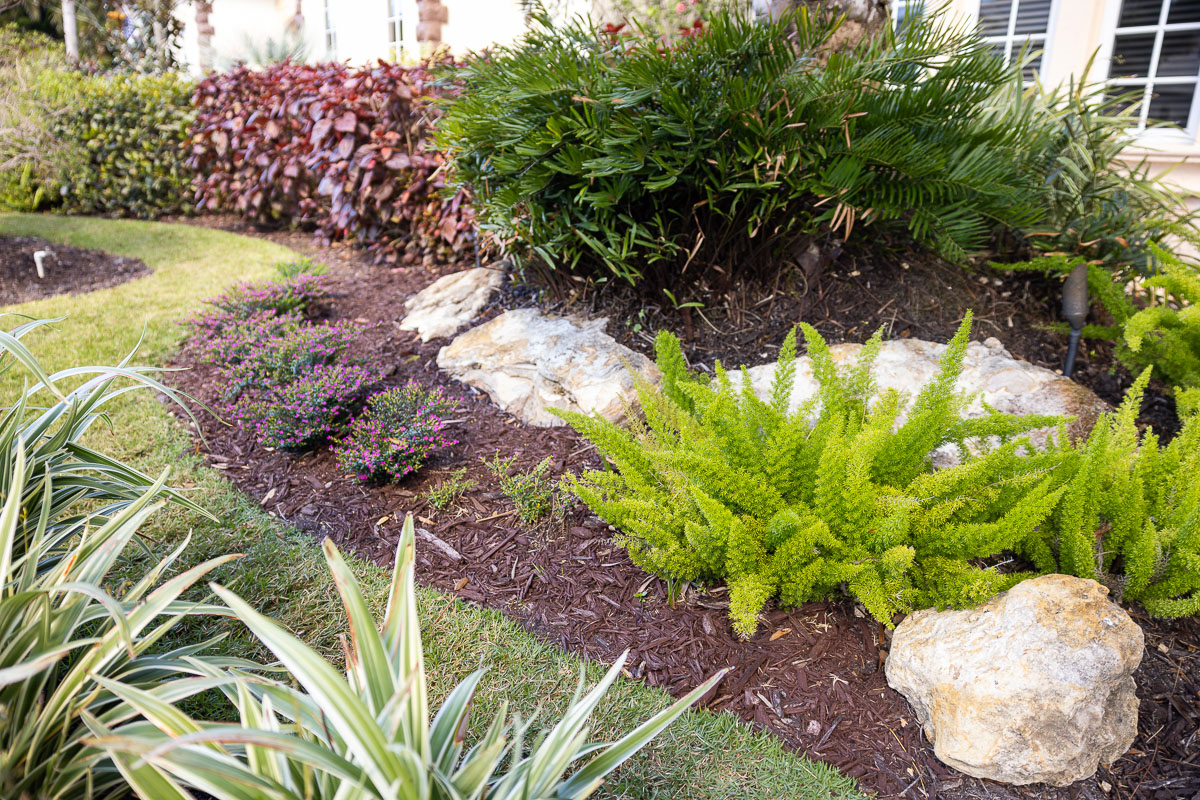
More color, more varieties, and more decorative features can sound like more value. In practice, adding without editing often creates a landscape that feels busy, difficult to maintain, and disconnected from the home.
Restraint creates visual clarity.
A landscape is easier to understand when its major ideas are limited and repeated. A consistent hedge can establish structure. One groundcover can connect separate beds. A restrained group of accent plants can guide attention toward the entry without asking every corner of the property to become a focal point.
Clarity does not require a landscape to feel plain. It allows color, texture, and specimen plants to have greater impact because they are surrounded by calmer supporting elements. When everything is special, nothing feels especially important.

A clear plan establishes hierarchy before plants and materials are installed.
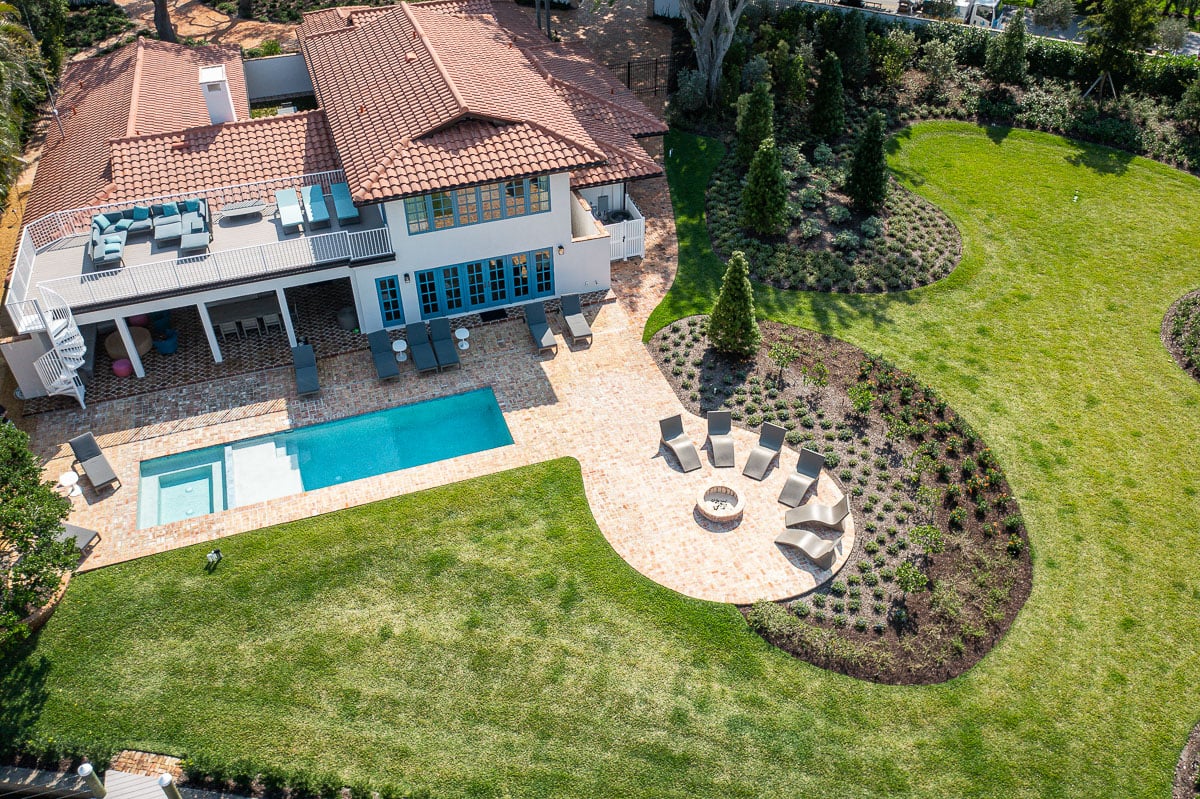
Consistent forms and materials make the finished property feel connected.
Every plant should have a role.
Plant selection becomes stronger when each variety has a defined purpose. Some plants establish the background. Others soften architectural edges, provide seasonal interest, frame a view, or create a focal point. Selecting several varieties to perform the same role can weaken the composition and complicate future care.
A disciplined palette also makes mature growth easier to anticipate. Repeated plants tend to respond in a similar way to pruning, irrigation, sunlight, and seasonal conditions. The landscape becomes more predictable, and the original design remains easier to recognize over time.
This approach does not eliminate personality. It gives personal choices a stronger setting. A favorite flowering plant or dramatic palm becomes more meaningful when it is placed against a coherent foundation rather than surrounded by unrelated competition.
“Restraint is not the absence of creativity. It is the discipline that allows the strongest ideas to remain visible.
Open space is part of the composition.
Homeowners sometimes feel every open area should be filled. Yet breathing room can be one of the most valuable design elements. Space around a specimen highlights its form. A clean lawn panel can balance a richly planted bed. An uninterrupted view can make the home feel larger and more composed.
Open space also prepares the landscape for growth. Young plants need room to develop without immediately competing for light and air. Thoughtful spacing may feel conservative on installation day, but it protects the mature design from overcrowding.
Does this choice strengthen the main idea, or does it introduce a new idea the landscape does not need?
Refinement is easier to live with.
A restrained landscape often requires less corrective pruning, fewer replacements, and simpler ongoing decisions. Repetition makes maintenance standards clearer, while appropriate spacing reduces the pressure created by plants competing for the same area.
Most importantly, restraint allows the home and landscape to share attention. The planting supports the architecture instead of covering it, and the property feels finished without feeling full.
The goal is not to use as little as possible. The goal is to use exactly what the composition needs. That balance creates a landscape that feels confident, intentional, and enduring.