
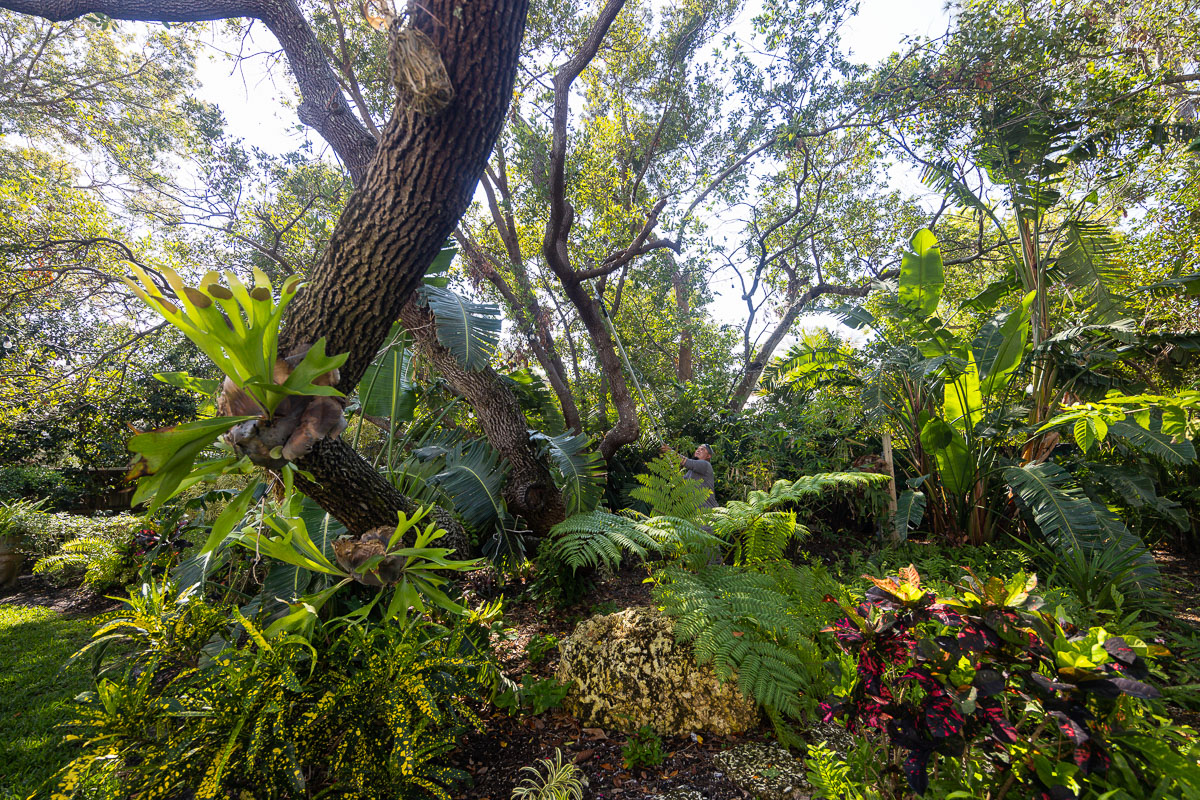
A beautiful landscape is more than a collection of attractive plants. It is a composition. Each bed line, specimen, texture, and open space contributes to the way a home is approached, framed, and experienced.
Good design begins with purpose.
Before selecting a single plant, a designer should understand what the landscape needs to accomplish. The front entry may need a stronger sense of arrival. A long wall may need softness and scale. A pool area may call for privacy without feeling enclosed. A narrow side yard may need a simple, durable solution that keeps circulation clear.
Purpose gives every choice a reason. It helps determine where height belongs, where views should remain open, and where color will have the greatest effect. Without that direction, even premium plants can feel like unrelated additions rather than parts of a complete landscape.
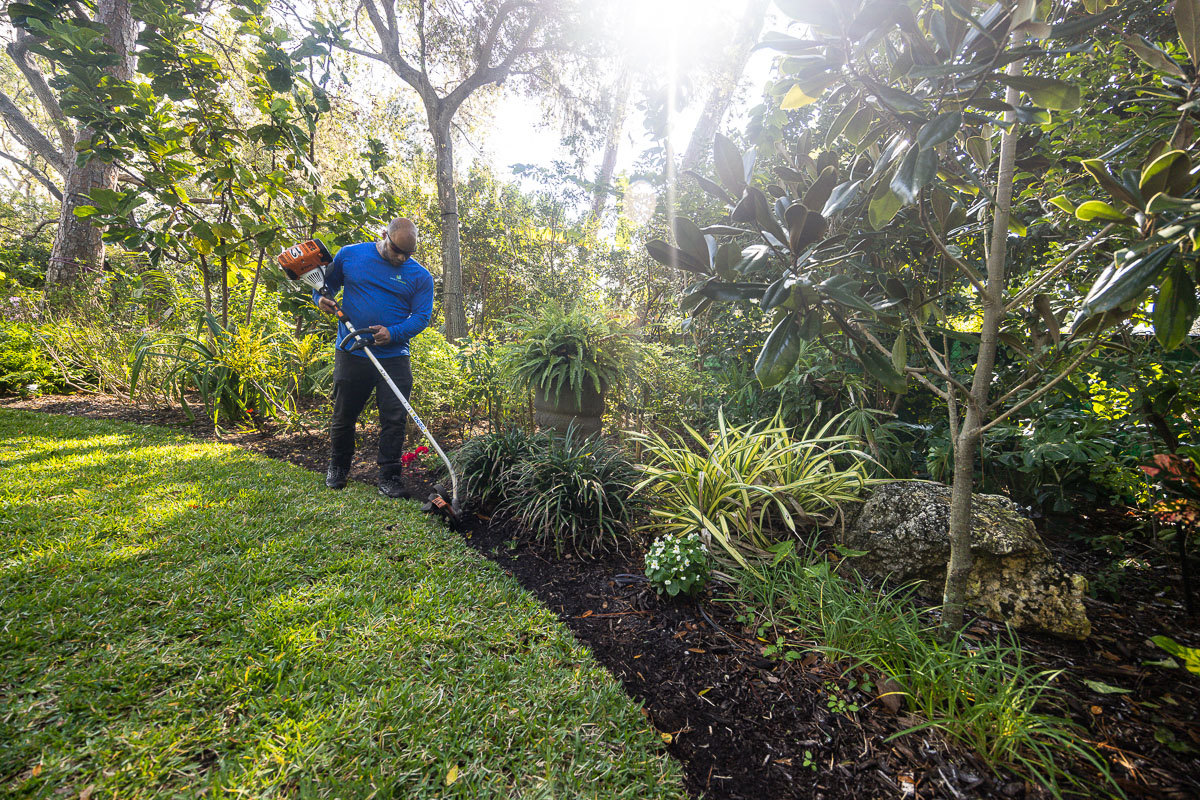
Layout, scale, and plant relationships are considered before work begins.
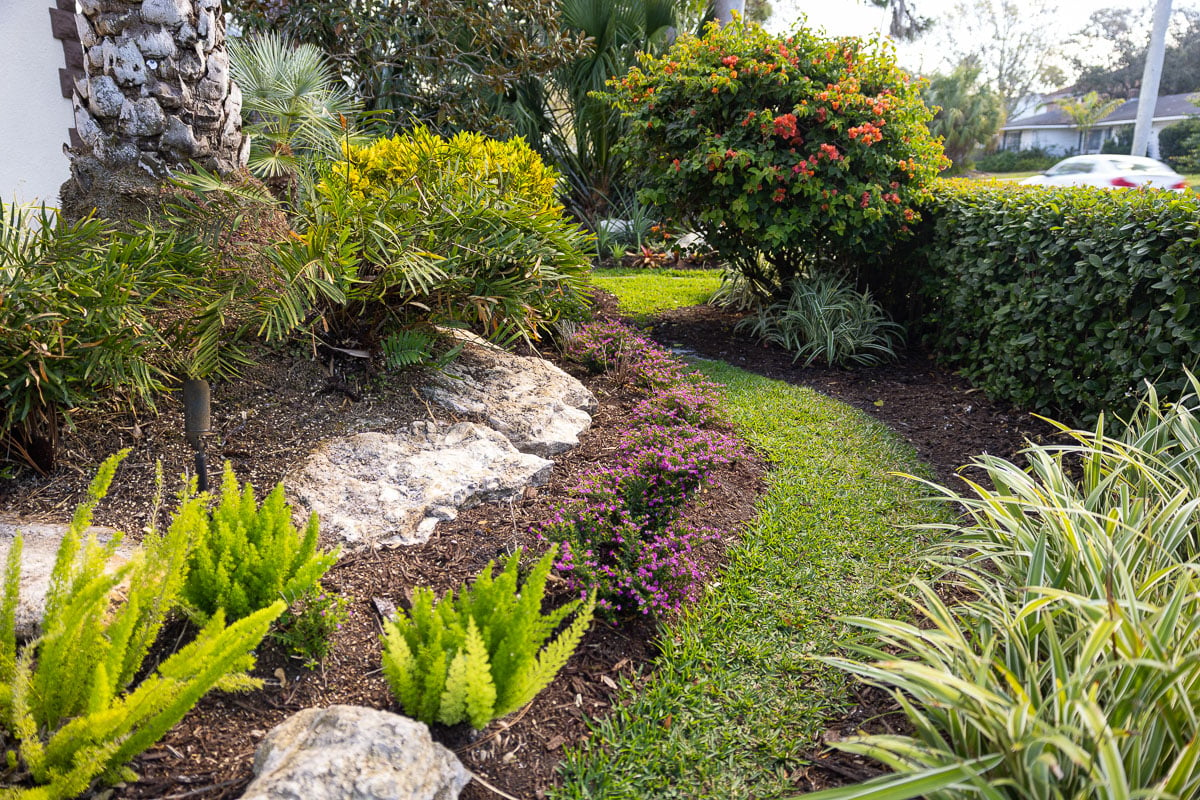
Structure and softness come together to complement the architecture.
Repetition creates calm.
One of the most powerful tools in landscape design is repetition. Repeating a shrub, groundcover, color, or form creates rhythm and allows the eye to move comfortably through the property. It also gives important focal points more impact because they are surrounded by visual consistency.
This does not mean every bed should look identical. Repetition creates a shared language, while subtle variation keeps the landscape responsive to each space. The result feels collected and intentional rather than crowded with competing ideas.
Restraint is equally important. A designer must know when the composition has enough color, enough texture, and enough variety. Leaving room around a specimen or allowing one material to continue uninterrupted can feel more refined than filling every available space.
“A well-designed landscape does not compete for attention. It guides the eye and gives the home a stronger presence.
Scale matters now and later.
Plants are living materials, and their mature size must influence every plan. A shrub that appears appropriately small on installation day may eventually cover a window or crowd a walkway. A palm placed too close to the home can lose its elegance as the canopy develops.
Thoughtful spacing can look restrained at first, but it gives each plant room to become what it was selected to be. Designing for maturity protects the architecture, reduces unnecessary pruning, and allows the original composition to become more convincing with time.
Choose every plant for the role it will play in the complete composition, not only for how it looks on its own.
The best landscapes belong to the home.
A Mediterranean residence, a coastal home, and a contemporary property should not receive the same landscape treatment. Architecture establishes proportions, materials, and a visual character that the landscape can reinforce.
The homeowner matters just as much. Maintenance preferences, favorite colors, privacy needs, entertaining habits, pets, and the way the property is used should shape the final direction. A landscape can be polished without feeling impersonal when these details are considered from the beginning.
That is the art of good design. It balances beauty with function, structure with softness, and the immediate impression with the way the property will mature. The finished landscape feels natural to the home because every visible choice supports a larger idea.